Conventional fixed appliance
Lingual fixed appliance
Removable appliances
Clear aligners
Conventional fixed braces
The classic "train track" brace. Small brackets are glued to the front teeth; sometimes metal bands are fitted around back teeth for support. A wire is placed between the brackets and held with small elastic bands called ligatures. Every 6 to 8 weeks the wire and ligatures are replaced until the teeth are aligned, then the brackets are removed and the teeth cleaned. White or clear brackets are available for a more aesthetic look.
How long does it take?
For a teenager, on average 18 months to three years. The harder bone of adults can add an extra 12 months.
Does it hurt?
Fitting the brace takes up to an hour and is painless. Each time a new wire is fitted your teeth may be tender for about 12 hours; the painkiller you would use for a headache will help.
Clear aligners
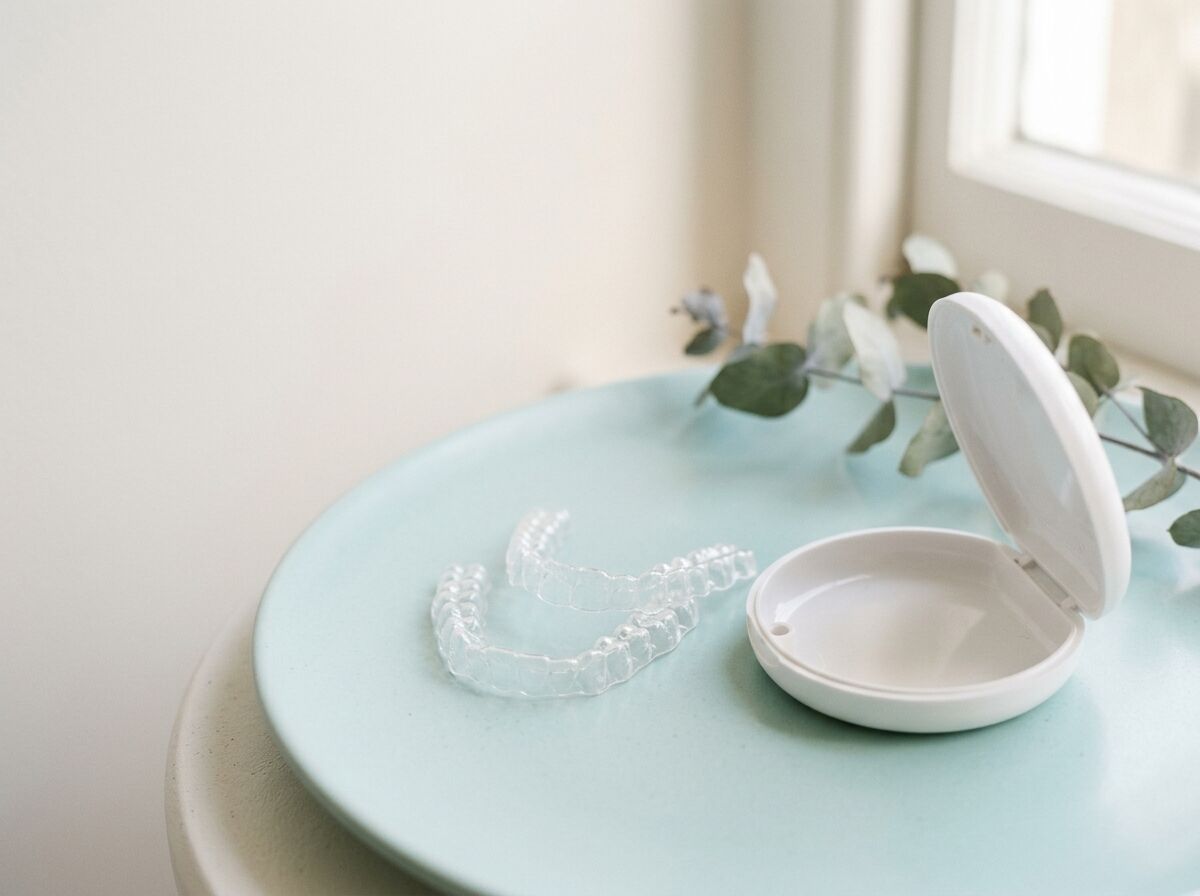
Clear aligners are the latest evolution in moving teeth. Clear trays are made from a mould of your teeth using a 3D printer, with a computer image used to make small adjustments that move individual teeth. Each tray is worn all day except when eating or cleaning, and after a week or more you move to the next tray.
They are not a direct replacement for a fixed brace: they suit small movements of less than 3 to 4 mm and are often used for patients with some relapse after previous orthodontic treatment.
Lingual fixed braces
Similar to a conventional fixed brace, but fitted to the tongue side of the teeth, so it cannot be seen. Treatment takes a similar time. The brackets can irritate the tongue at first, and because the brackets and wires are custom made, the cost is higher.
Removable appliances
A brace that can be taken out, used for many problems, from moving individual teeth with custom springs to influencing the growth of the jaw in adolescents. They must be worn diligently to work, cannot treat every problem, and are sometimes used before a fixed brace.
Retainers
After active treatment the teeth will always want to move. Retainers hold them in position: worn full time at first while the teeth set into the bone (six months or more), then for less of the day, and for part of every week long term. There are three types: Hawley retainers (with wires), Essix retainers (thin and clear) and bonded retainers (a wire glued behind the front teeth).
Other appliances we use
- Palatal expansion devices widen the top jaw to create space for crooked teeth, in children and adolescents. Usually six to eighteen months, with careful monitoring and retainers.
- Temporary anchorage devices (TADs): small screws placed in the bone under local anaesthetic to give the strongest resistance when moving teeth. Expect a dull ache for a day or two.
- Nance devices: a mouth anchor that stops back teeth moving forward, often used to reduce how far upper teeth stick out.
- Separator elastics gently push teeth apart for a few days so a band can be fitted. It feels like food stuck between the teeth.
- Inter-arch elastics connect the top and bottom braces. Wear them as instructed; if you run out, call reception to collect more.
Further information is available from the British Orthodontic Society.
Orthodontic treatment leaves the patient with a smile they are proud of, and it's a treatment option for all ages. I worked at a specialist orthodontic practice for over 7 years, part of a team completing 350 braces a year. Being patient and moving teeth gently, slowly and predictably gives greater long-term stability and reduces the risk of side effects.