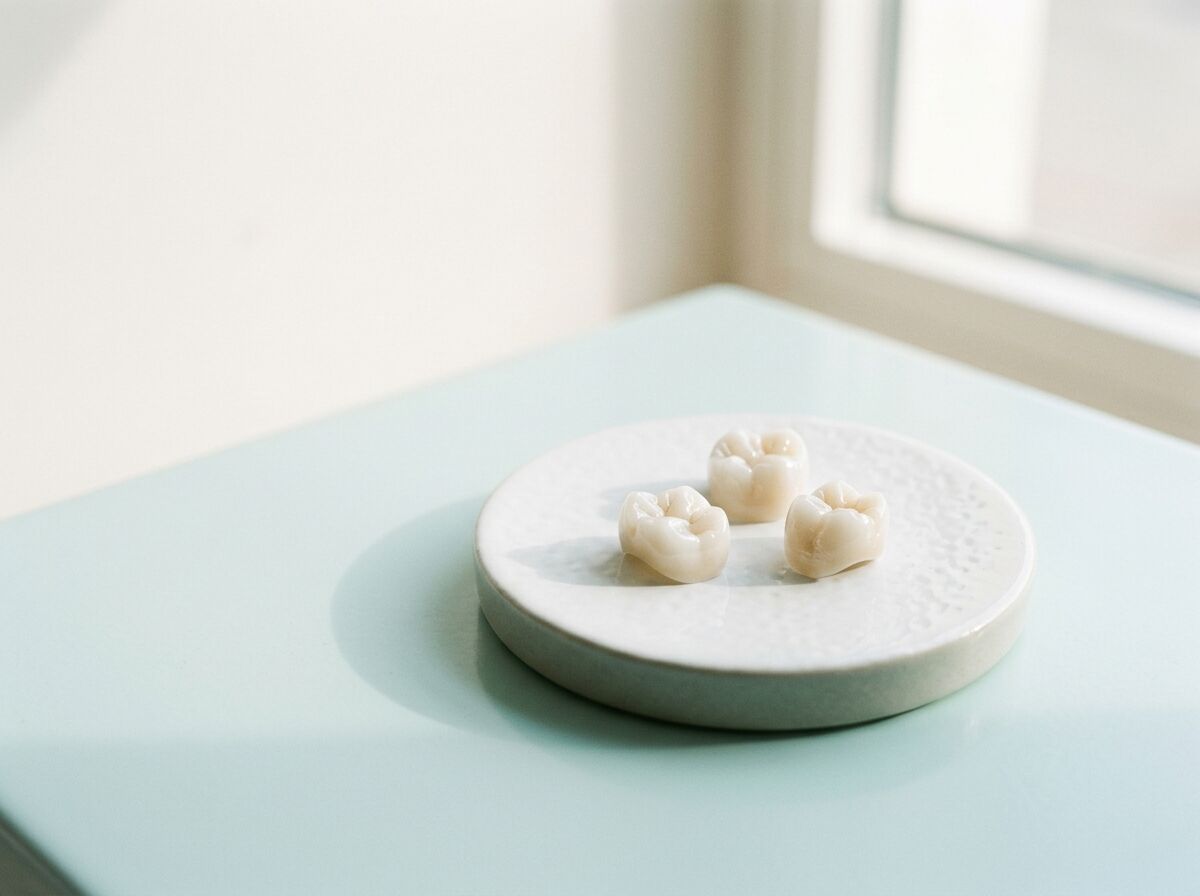
Crowns
Often called "caps", crowns cover the remaining natural tooth when over half of its structure has been lost. They range from all-metal gold crowns to high-strength ceramic crowns; the choice depends on how much tooth is left, the type of tooth and your preference.
Post crowns
When a tooth is very broken down, a metal post may be placed into the root to support the crown. Post crowns often come loose and need re-cementing, much like a drawer knob that works loose with time. They are not recommended for lone-standing front teeth or to support large bridges. They are better than losing a tooth, but have their limitations.
Bridges
Bridges restore gaps between teeth: a false tooth attached to caps on the teeth either side is glued into place. Sometimes a bridge is held on both sides of the gap, sometimes only one, depending on the size of the gap and how the teeth function. Bridges look very good. The compromise comes when the neighbouring teeth are healthy and unfilled, as it is a difficult decision to drill a healthy tooth.
See real examples of adhesive bridges in our gallery.
Inlays and onlays
An alternative to a large filling. Inlays are made by a dental technician from an impression of the cavity, in metal, resin or ceramic, and then cemented into the tooth. They are stronger than fillings.
Veneers
A thin piece of ceramic or resin glued onto the surface of a tooth, a little like a false fingernail. Veneers change the colour and shape of teeth and can restore damaged or rotated teeth or make teeth whiter. Usually some tooth preparation is needed, but modern techniques allow some veneers to stick straight onto the tooth surface.
Veneers may de-bond or fracture during their life. Where several teeth are veneered, as in a cosmetic make-over, a night guard is recommended to protect them from night-time grinding. Read more on our cosmetic dentistry page.
Dentistry is developing. The modern materials we can use closely mimic natural teeth. It's exciting times for dentists interested in this discipline.