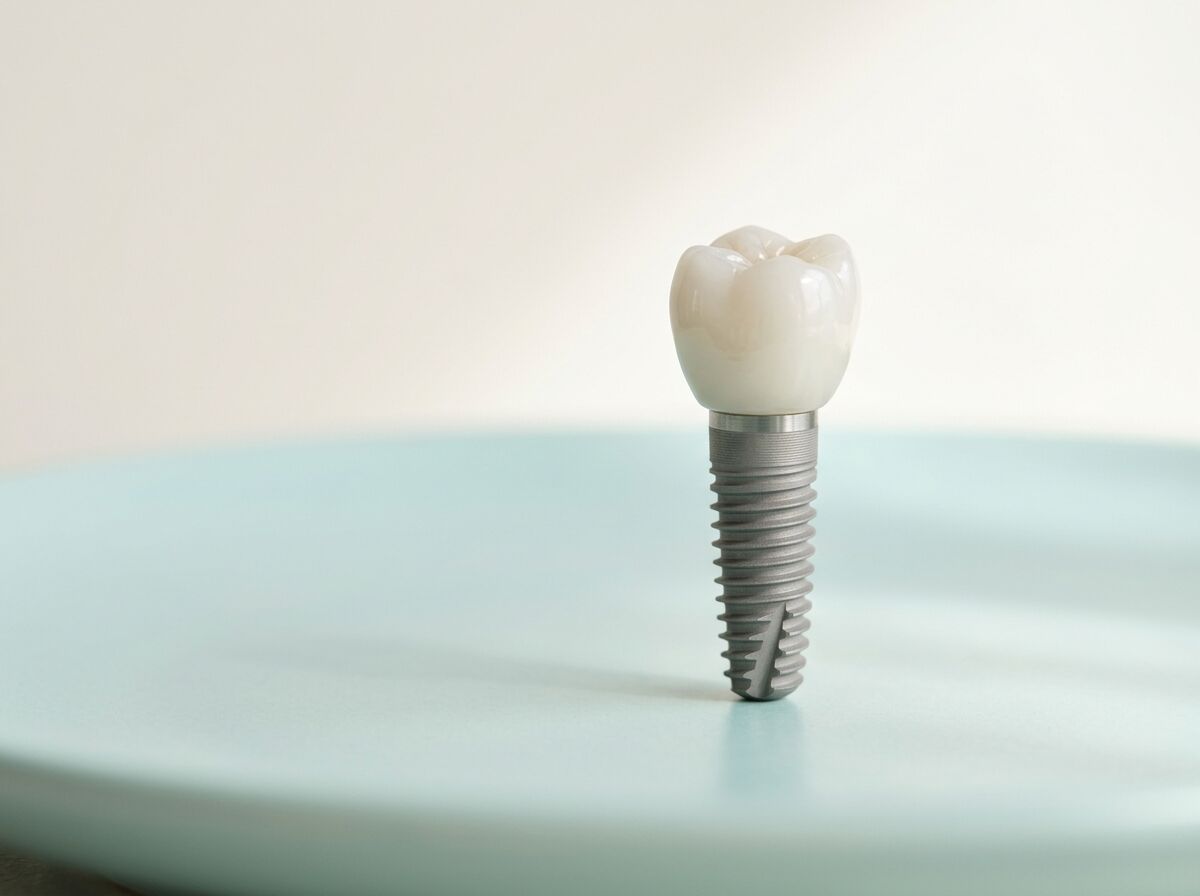
What is a dental implant?
Dental implants are titanium or zirconium screws placed surgically into the jaw to replace a missing tooth or teeth. Once the bone has healed around the implant, a connection is made through the gum to which a crown, bridge or denture clip is attached.
What does treatment involve?
- Consultation and assessment. Scans or X-rays are used to create a plan that fits the ideal implant to the quality and quantity of your bone.
- Placing the implant. After a local anaesthetic, a window is carefully cut into the gum, the bone is prepared and the implant inserted, then the area is stitched. In the majority of cases intravenous sedation is used to make this more comfortable. A temporary bridge or denture can be worn while it heals.
- Healing. The implant bonds with the jaw bone, usually over three to six months. Occasionally implants are stable enough to be used straight away.
- Connecting. A small procedure under local anaesthetic connects the implant through the gum.
- Your new teeth. After 4 to 8 weeks, impressions are taken and the laboratory makes the crown, bridge or denture, fitted a couple of weeks later.
In most cases, allow six months and expect several appointments. For a routine single tooth implant it takes around three months until you can chew on it; where less bone is available it may take a year. Where stitches are used, a review is needed 10 days to two weeks later.
Cost
The cost of single implants compares favourably with conventional bridges. Your treatment plan and estimate will explain the timeline and expected fees. In the unlikely event of unexpected extra costs, they will be discussed with you. An initial consultation outlines your options with a rough estimate of costs and time frame.
Your questions answered
Why choose an implant?
Reliability, comfort, conservation of the neighbouring teeth, bone support and prevention of further bone loss, as well as confidence. Implants can be an alternative to dentures and bridges, or can hold loose dentures in place.
Who can have a dental implant?
Most patients are suitable. Exceptions include patients with rare medical conditions, those who have had facial radiotherapy, take bisphosphonates, have severe diabetes, untreated decay or periodontal disease, long-term heavy smokers and patients who grind their teeth.
How long do implants last?
Nine out of ten implants can be expected to last over ten years, provided you keep up regular examinations, hygiene and maintenance appointments.
Do implants hurt?
Implants are placed using an injection in the gum, and sedation can be used if you are nervous. You will not feel pain during the procedure. Expect some discomfort for around ten days afterwards, which can be managed with painkillers. Stitches are removed after about a week.
What if I do not have enough bone?
After a tooth is removed, the bone begins to shrink. Gentle extraction and bone grafting help maintain bone and improve the result. Grafts can rebuild bone where teeth have been missing for years, fill gaps around an implant, or be placed in the sinus (a sinus lift). In severe cases a small amount of bone is taken from another part of the jaw and given six months to mature.
What are the risks?
Every medical procedure has risks. Nerves, blood vessels and gums can be damaged during surgery; nerve damage can cause temporary or permanent altered sensation or pain in the lips. Implants have over a 90% success rate but can lose integration with the bone or suffer gum disease (mucositis and peri-implantitis). Smoking, diabetes and grinding increase the risk. Your dentist will explain the risks for your case after assessment.
Are implant teeth difficult to clean?
No, but they need special attention: clean around and between them as you would natural teeth, consider an antibacterial mouthwash and have more frequent scale and polishes, especially if you have a history of gum disease.
Can I take the teeth out?
Teeth screwed or glued to implants can only be removed by your dentist. Complete dentures fixed to implants by bars or retainers can be taken out for cleaning.
What if I have an accident?
Implants can be damaged like natural teeth, so wear a professionally made mouthguard for contact sports. Damaged teeth can be removed from the implant and replaced; a damaged implant screw may need replacing or repairing.
Although not an absolute replacement for a tooth, implants are a very close replacement to the natural tooth. I've gained experience from some of the north west's pioneers in high street dental implantology. The technology is constantly evolving, with success rates approaching 90% over a ten year period. This area of dentistry requires regular training, which is what makes it rewarding and engaging.
Dr Dadswell undertook postgraduate training in implantology at the University of Central Lancashire. See implant cases in our gallery.